
The flagship qualification
Level 4 Equine Intimate Health Practitioner Diploma
A complete professional foundation for experienced horse people who want to build a credible, welfare-led specialist service with clear legal and professional boundaries.
Accreditation, insurance context and professional connections

Who it is for
For capable horse people ready to work responsibly.
The course is designed for learners aged 18 or over who are confident handling horses and prepared to work within welfare, safety, legal and professional boundaries.
Study the theory online at your own pace, complete knowledge checks, assignments and case studies, then demonstrate practical competence through one of two standard assessment routes.
Check whether the Level 4 pathway suits youComplete curriculum
Six focused modules.
Review the complete curriculum before deciding whether the course matches your experience and professional goals.
- 01
Equine intimate health, law and professional scope
- 02
Anatomy and physiology
- 03
Equine behaviour, handling and practitioner safety
- 04
Urethral beans and common observations
- 05
Structured intimate health screening
- 06
Records, risk assessment and compliant business practice
How you will learn
Flexible theory. Supported progress. Assessed competence.
Your studies connect knowledge, professional judgement and practical competence without requiring every learner to attend on a fixed date.
Start with suitability
Review the experience, safety and professional expectations before enrolling.
Study flexibly online
Work through six structured modules with personal tutor support and clear feedback.
Demonstrate competence
Complete the knowledge work and choose one of the two standard practical assessment routes.
Plan professional next steps
After successful completion, explore insurance and membership pathways subject to current requirements.
Practical assessment
Two standard routes. The same required competence.
Both routes remain subject to suitability, horse welfare, safety and assessment requirements. Full guidance is provided before assessment.
In-person assessment in Scotland
Attend an arranged assessment where suitable horses and the working environment are provided.
Approved video submission
Submit the required practical evidence from an appropriate setting, following confirmed welfare, safety and evidence requirements.
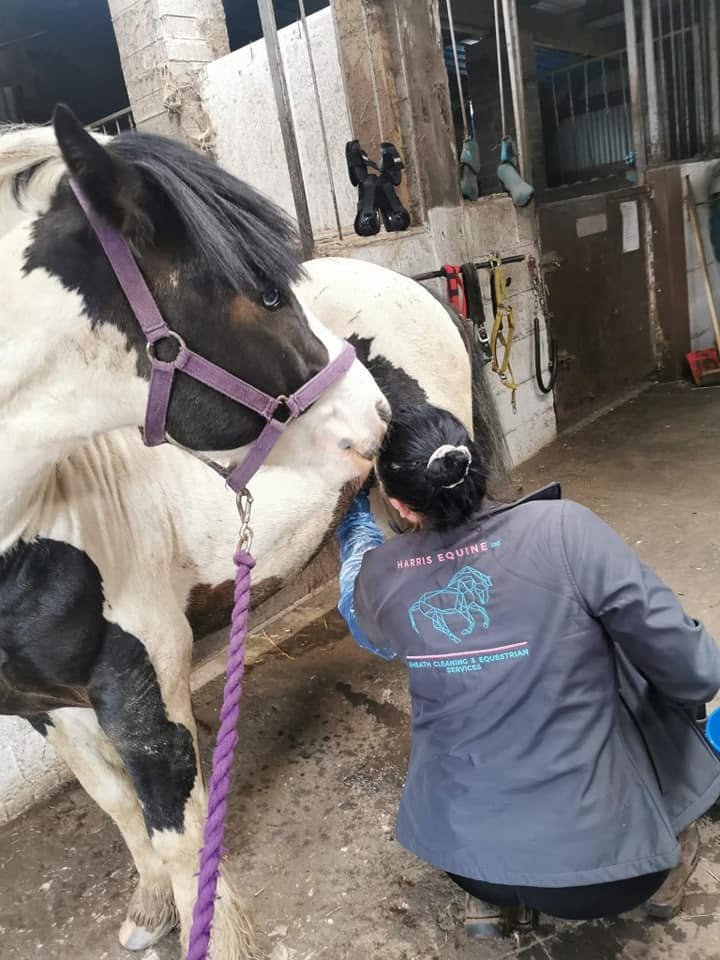
New for 2027
Small-group practical training and assessment days
An optional opportunity for Level 4 learners to train and complete their practical assessment with Stacy in a calm, supported small-group setting.
- Selected dates across the UK
- Limited places
- Included at no additional cost
Professional pathway
Understand each organisation's role.
Accreditation, course completion, insurance and membership are connected, but they are not the same thing.
Independent accreditation
UK Rural Skills provides independent course accreditation and quality assurance. It is not a regulated awarding organisation.
Insurance pathway
Successful graduates can explore the bespoke KBIS pathway, subject to the insurer's current terms, eligibility and acceptance.
Supporting partner
The British Grooms Association is a supporting partner of Harris Equine Training.
Professional membership
Successful graduates can explore EIHF membership, subject to the Federation's current requirements.
The course includes
- Six structured online modules
- Twelve months' learner-portal access
- Tutor support throughout your studies and until completion
- Knowledge checks, assignments and case studies
- Two standard practical assessment routes
- New for 2027: optional small-group training and assessment with Stacy on selected UK dates, subject to limited availability
- Feedback and opportunities to improve
- UKRS-accredited certification after successful completion
Before you enrol
Clear answers to important questions.
Read the detail before purchasing. If you are still unsure, use the suitability guide or contact the training team.
Take the suitability quizWho is the Level 4 Diploma designed for?
It is designed for learners aged 18 or over who already have confident, practical horse-handling experience and want to develop a responsible specialist service within clear welfare, safety and professional boundaries.
How is practical competence assessed?
Choose either an in-person assessment in Scotland or an approved video submission. Both routes assess the same required competence and remain subject to suitability, horse welfare, safety and evidence requirements.
Is one assessment route preferred?
No. The in-person Scotland route and the approved video-submission route are both standard routes. Choose the route that is suitable for your circumstances.
Can I study from outside the UK?
Yes. Approved video submission supports distance and international learners, subject to the course evidence requirements. You remain responsible for checking the legal and insurance position where you intend to practise.
What does UK Rural Skills accreditation mean?
UK Rural Skills provides independent course accreditation and quality assurance. It is not a regulated awarding organisation.
Does successful completion guarantee insurance?
No. Successful graduates can explore the bespoke KBIS insurance pathway, subject to the insurer's current terms, eligibility and acceptance.
What happens after I complete the course?
After successful completion, you can explore suitable practitioner insurance through KBIS and Equine Intimate Health Federation membership, each subject to its current requirements. The course does not guarantee insurance, income or immediate business success.
Are the new 2027 practical training and assessment days compulsory?
No. They are an additional optional route for enrolled Level 4 learners and are included at no additional cost. Small-group days with Stacy are planned for selected dates across the UK with limited places. In-person assessment in Scotland and approved video submission remain available. Dates, locations, capacity and booking arrangements are not yet confirmed.
Ready to take the next step?
Explore the complete training pathway before you enrol.
Check your suitability first, then review the current enrolment terms in full.