
More Than Learning a Skill: Building a Safer Pathway into Equine Intimate Health
By Stacy Harris-Wann, Founder and Training Director, Harris Equine Training
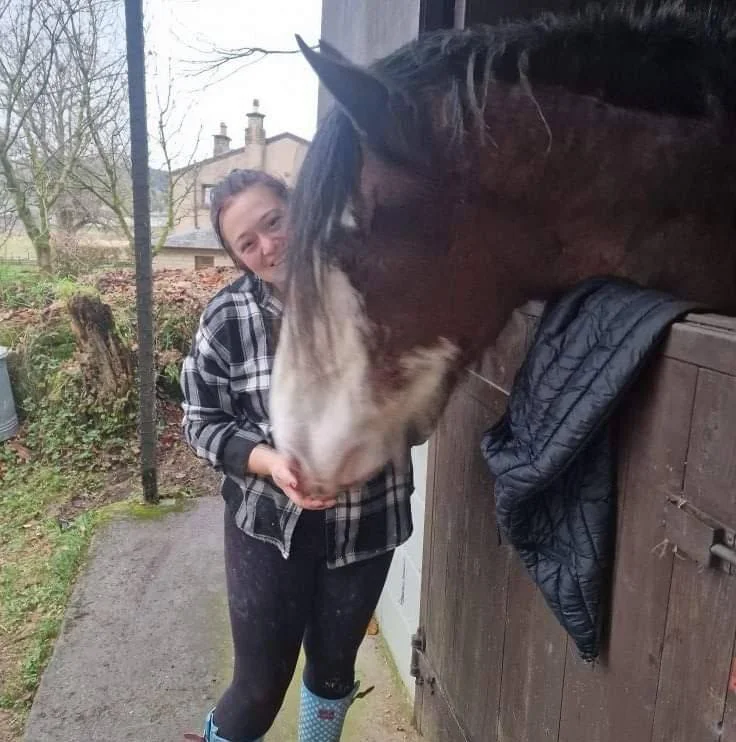
Stacy Harris-Wann & Mr Munro
I would much rather welcome them, educate them and give them the strongest possible foundation than leave them trying to work everything out for themselves.
When I first began working in equine intimate health, there wasn't a structured vocational pathway for somebody who wanted to enter the profession.
People learned in different ways, often through experience, informal guidance or by developing their practical skills over time.
As the sector has grown, I have become increasingly passionate about changing that.
Not by making it harder for new people to enter the industry, but by making sure that when they do, there is a credible, supported and professional route available to them.
That distinction genuinely matters to me, and should to you!
If someone has decided they want to provide equine intimate health services professionally, I would much rather welcome them, educate them and give them the strongest possible foundation than leave them trying to work everything out for themselves.
Learning to clean a sheath is only part of the job
One of the biggest misconceptions about vocational training in this area is that the education is simply about learning how to perform the practical procedure. It shouldn't be. Someone entering professional practice needs to understand what surrounds that procedure. They are going onto clients' yards, handling horses they don't know and providing a sensitive service involving equine health and welfare. That requires much more than practical technique.
Our students learn about areas including anatomy, behaviour, safe handling, hygiene, biosecurity, equine welfare and recognising when something they observe requires veterinary attention.
But professional preparation also needs to cover the things that aren't happening directly beside the horse.
What insurance do you need?
What records should you keep?
What information should you collect from an owner?
What does informed consent look like?
What should your terms and conditions cover?
How do you protect client information?
What happens when something goes wrong?
What are the boundaries of your professional role?
When should you stop and refer to a veterinary surgeon?
These aren't optional extras to me.
They are part of learning how to practise professionally.
Vocational education should prepare someone for the real job
This is the area of education I am particularly passionate about.
A good vocational programme shouldn't simply teach enough information for somebody to pass an assessment and receive a certificate. It should prepare them for what happens afterwards. That means connecting theoretical knowledge with practical application, professional judgement and the realities of running a service. It also means recognising that our students don't all arrive at the same starting point. Some already have extensive equestrian careers. We have trained veterinary nurses and experienced equine professionals who bring considerable existing knowledge with them. Others are entering a professional equestrian environment for the first time. That doesn't mean they should be excluded.
It means their educational pathway matters even more.
If somebody is new to the industry, I want them to understand not just what to do, but why they are doing it, when they shouldn't do it and where the limits of their role lie.
Why external accreditation matters
I also believe there is an important difference between a training provider saying its own course is good and being prepared to have that training externally scrutinised.
Harris Equine Training's professional practitioner training is accredited by UK Rural Skills.
That external accreditation matters enormously to me. We are asking students to invest their time, money and trust in their professional education. Horse owners may subsequently place trust in those graduates. Insurers need confidence in the training behind the people they insure. The content and assessment process should therefore be capable of standing up to scrutiny beyond Harris Equine itself.
External quality assurance provides an additional level of accountability.
It means we aren't simply creating our own training, setting our own expectations and then declaring ourselves satisfied with them.
Assessment has to mean something
The same principle applies to assessment. Completing learning materials is not the same thing as demonstrating understanding. Our professional pathway therefore includes assessment designed to establish whether the student can apply what they have learned. We retain records of student learning, assessment and certification, creating an educational record behind the qualification awarded. Practical competence matters too. Someone preparing to work independently needs an opportunity to demonstrate that they can translate theoretical knowledge into safe, appropriate practice. A certificate should represent something.
Insurance should be part of the pathway, not an afterthought
One of the areas I am particularly proud of is the relationship we have developed with KBIS.
For somebody new to a specialist service, professional insurance can be confusing. They may not know what cover they need, what an insurer will expect or whether their training will be accepted. A credible pathway should help bridge that gap.
Harris Equine Training has become a recognised training route for people seeking appropriate insurance to enter this area of professional practice, and a significant proportion of our students have historically come to us following direct referral from KBIS.
That connection between education, demonstrated competence and appropriate insurance is exactly the sort of infrastructure I believe a developing profession needs.
Support shouldn't disappear when somebody enrols
Newcomers also need somewhere they feel comfortable asking questions. There is a great deal to absorb when you're entering a new professional field, particularly if you're also establishing your first equestrian business. I want Harris Equine Training to provide an environment where students can say:
"I'm not sure about this."
"Can you explain that again?"
"What would you do in this situation?"
"I've encountered something I wasn't expecting."
Those questions should be welcomed.
I'd much rather someone asks for support than feels they need to pretend to know something because they're frightened of looking inexperienced.
That is part of developing safe practitioners.
Knowing when to stop is a professional skill
Some of the most important education we provide isn't about what a practitioner can do. It's about recognising what they shouldn't do.
Equine intimate health practitioners are not veterinary surgeons.
They may encounter abnormalities or situations requiring veterinary investigation, and they need sufficient underpinning knowledge to recognise when something falls outside their professional role.
They need to understand the difference between observing something and diagnosing it. They need to know when not to continue.
They need to know when the appropriate action is:
Stop. Document. Communicate. Refer.
I consider that an essential part of competence. Safety doesn't come from teaching somebody to believe they can handle every situation.
It comes partly from teaching them to recognise the situations they shouldn't handle themselves.
From student to professional
My aim for Harris Equine Training is therefore bigger than providing courses.
I want us to continue developing credible vocational pathways into specialist intimate health paraprofessional services
Pathways that combine:
Education → knowledge → practical competence → assessment → professional compliance → appropriate insurance → continued development
And importantly, pathways that are accessible to newcomers.
Once somebody completes their training, continued professional development and support also matter.
This is where our relationship with the Equine Intimate Health Federation provides an additional professional layer for those who choose it, including continued professional development, professional standards, insurance verification and ongoing practitioner support.
But the foundation starts with education.
Supporting the next generation
I don't believe experienced professionals should be frightened of educating the people coming behind them.
Quite the opposite.
If somebody is going to enter our industry, I want them to have access to as much good-quality education, guidance and professional support as possible.
I want them to understand welfare.
I want them to understand compliance.
I want them appropriately insured.
I want them to recognise their limitations.
I want them to know when to involve a vet.
I want them to have somebody they can ask when they aren't sure.
And ultimately, I want them to become excellent at what they do.
Because every knowledgeable, responsible and professional practitioner who enters the equestrian industry has the potential to improve it.
That is what motivates me to continue developing Harris Equine Training.
Our aim is not to restrict entry into the profession, but to ensure those entering it have a credible, supported and professional pathway to do so.
For me, that is how we make entry safer.
And it is how we help the next generation of equestrian professionals start with the foundations they deserve.
